

Top Website Design Agency in Chandigarh
Top Website Design Agency in Chandigarh When it comes to choosing the top Website Design agency in Chandigarh, businesses demand
Web Development, SEO & App Development Services | DigitWebSEO
One of the first and most critical questions every business owner in India asks before venturing online is: “What is the real website development cost in india” You may have heard figures ranging from a few thousand rupees for a basic site to several lakhs for a complex platform. This vast spectrum can be confusing, but the price isn’t arbitrary. In today’s digital-first economy, where 62% of small businesses rely on digital platforms for sales, a website is no longer an optional brochure but a vital engine for growth. The challenge isn’t if you need a website, but how to budget for one effectively without encountering hidden fees and unexpected hurdles.
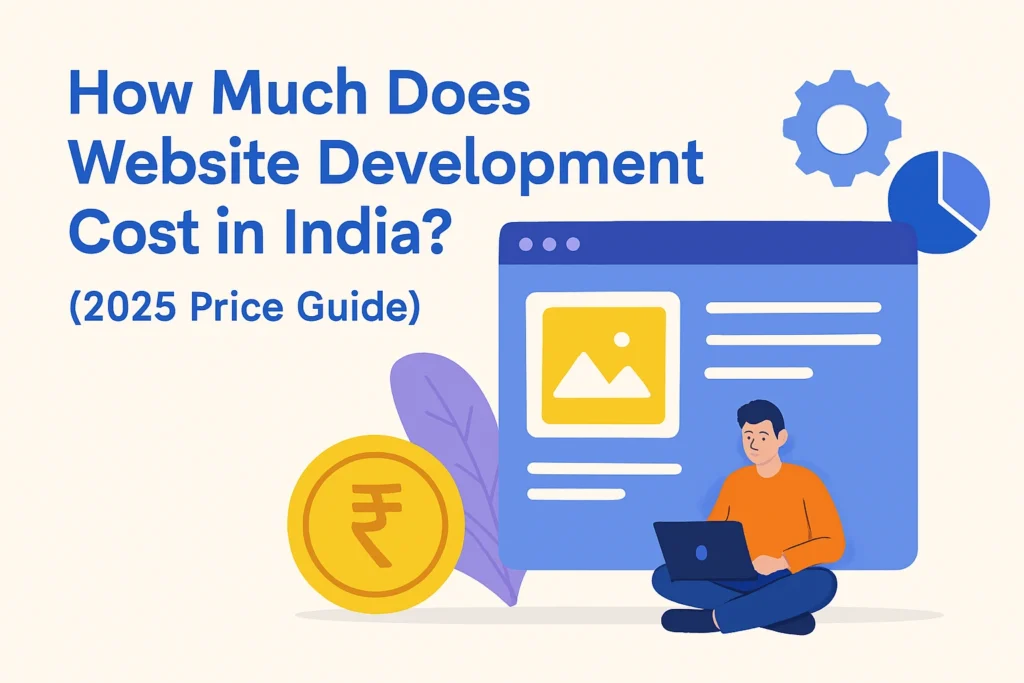
When budgeting for a new website, it’s helpful to start with a general overview. For the majority of small to medium-sized businesses in India, the upfront website development cost in india typically falls between ₹15,000 and ₹2,50,000. However, this is just a starting point. The cost can easily dip as low as ₹5,000 for a simple, static portfolio or soar beyond ₹20,00,000 for a large-scale, custom enterprise application.
This wide range exists because a website is not a one-size-fits-all product. A simple digital brochure with a few pages has a vastly different purpose, and therefore cost, than a sophisticated e-commerce platform with thousands of products and automated inventory management. To budget accurately, it’s crucial to shift your perspective from viewing a website as a one-time “cost” to a long-term “investment.” A cheaply made website that fails to attract visitors or generate leads offers a poor return and can become more expensive in the long run than a well-planned, higher-priced site that drives business growth. After all, research shows that 75% of consumers judge a company’s credibility based on its website design. The goal isn’t to find the cheapest option, but the one that provides the best value and a clear path to achieving your business objectives.
Understanding the key drivers behind website pricing is the first step toward creating an accurate and realistic budget. The final quote you receive is a culmination of several interconnected decisions.
This is the single most significant factor. A simple, informational website with static content requires far less development time and fewer resources than a dynamic, interactive platform. For example, a basic static website may cost between ₹5,000 and ₹20,000, whereas a dynamic website with a content management system (CMS) typically ranges from ₹20,000 to ₹50,000. E-commerce sites and custom applications represent the highest tiers of complexity and cost.
You have two main paths for your website’s design. Using a pre-built template is a fast and affordable option, with premium themes costing anywhere from ₹2,000 to ₹23,000. However, this approach offers limited uniqueness. A custom design, created from scratch by a professional designer, is tailored specifically to your brand. While this provides a unique user experience and stronger branding, it comes at a higher price, with agency-led custom designs costing between ₹75,000 and ₹2,50,000.
Every feature you add to your website—from a simple contact form to a complex booking system—increases development time and cost. Common functionalities that impact the price include e-commerce capabilities, payment gateway integration, live chat support, user login portals, and third-party API integrations. For instance, adding basic e-commerce functionality can cost between ₹25,000 and ₹2,50,000, while integrating a payment gateway through a developer might cost ₹15,000 to ₹50,000.
The platform you build on fundamentally affects the cost. Open-source systems like WordPress are technically free, but the real costs come from hosting, premium themes, plugins, and developer expertise. A WordPress site built by an agency can range from ₹30,000 to over ₹1,50,000. In contrast, a highly scalable e-commerce platform like Magento can cost an agency between ₹5,00,000 and ₹20,00,000 to develop due to its complexity.
The relationship here is direct: more pages require more design, development, and content creation, leading to higher costs. A small website with 1-10 pages might cost between ₹50,000 and ₹1,00,000, but a larger site with 40-50 pages could range from ₹2,00,000 to ₹6,00,000.
A website is an empty vessel without high-quality content. Professional copywriting, photography, and video production are essential for engaging users but are often budgeted separately. Experienced freelance writers in India may charge ₹2 to ₹5 per word, and a comprehensive content package from an agency for a 15-page site can cost between ₹16,000 and ₹30,000.
Who you choose to build your website is a major cost determinant. The Do-It-Yourself (DIY) route is the cheapest upfront, while hiring a professional agency is the most expensive. A freelancer typically falls in the middle. For example, a freelancer might build a basic website for ₹10,000-₹30,000, whereas an agency would likely charge ₹30,000-₹1,00,000 for a similar project. This will be explored in more detail later.
A beautiful website that no one can find is ineffective. A basic on-page SEO setup—including keyword research, meta tag optimization, and sitemap creation—is a crucial initial investment. This service can range from ₹3,000 to ₹15,000 and ensures your site is built on a search-engine-friendly foundation. This is distinct from ongoing monthly SEO services, which are a recurring marketing expense.
It’s important to recognize that these factors are interconnected. Choosing to build a complex e-commerce site, for instance, necessitates advanced features, which in turn demands a specialized platform like Shopify and rules out a DIY approach, pushing you toward a pricier agency. This cascade effect means strategic planning from the outset is key to managing your budget effectively.
To help you pinpoint a more accurate budget, here is a breakdown of costs for the most common types of websites. These figures are synthesized from extensive market data and represent typical price ranges you can expect in 2025.
Website Type | Ideal For | Typical Page Count | Estimated Cost Range (INR) |
Basic Static Website | Portfolios, Online Brochures, Simple Info Sites | 1-10 | ₹10,000 – ₹30,000 |
Dynamic Business Website | Service Businesses, Blogs, Corporate Profiles | 10-25 | ₹30,000 – ₹1,00,000 |
E-commerce Website | Online Stores, Retail Brands, Marketplaces | 50-100+ Products | ₹60,000 – ₹5,00,000+ |
Custom Web Application | SaaS Products, Booking Engines, Enterprise Portals | Custom | ₹2,00,000 – ₹20,00,000+ |
Export to Sheets
These are the simplest websites, often built with HTML and CSS, where the content doesn’t change frequently. They are perfect for individuals or small businesses needing a professional online brochure to showcase services, display a portfolio, or provide contact information. Their primary advantage is low cost and quick development time.
Dynamic websites are powered by a Content Management System (CMS) like WordPress, allowing you to easily update content yourself. They are ideal for corporate profiles, service-based businesses that need lead generation forms, and anyone wanting to run a blog or news section. These sites are interactive and built for growth.
The ecommerce website cost in india varies dramatically based on scale and complexity. These sites require features like product catalogs, shopping carts, secure payment gateways, and inventory management systems. A small store with up to 100 products might cost between ₹60,000 and ₹1,00,000, while a medium-sized platform with up to 1,000 products can range from ₹1,00,000 to ₹10,00,000. Large marketplaces can cost significantly more.
These are not websites in the traditional sense but are bespoke software solutions built to solve specific business problems. Examples include Software-as-a-Service (SaaS) platforms, custom Customer Relationship Management (CRM) systems, or large-scale enterprise portals. The cost is high due to the extensive custom coding, complex integrations, and rigorous testing required.
Choosing your development partner is a critical strategic decision that profoundly impacts your project’s cost, quality, and timeline. Each path—DIY, freelancer, or agency—comes with a distinct set of trade-offs.
Development Path | Typical Cost Range (Basic Site) | Pros | Cons | Best For |
DIY (Website Builders) | ₹3,000 – ₹20,000 / year | Lowest cost, fast launch, full control. | Limited design/functionality, unprofessional look, requires your time. | Hobbyists, micro-businesses, or those testing an idea on a minimal budget. |
Freelancer | ₹15,000 – ₹80,000 | More affordable than an agency, direct communication, flexible. | Inconsistent quality, limited skillset, risk of unreliability, poor project management. | Simple projects, small businesses with clear requirements and tight budgets. |
Agency | ₹30,000 – ₹1,50,000+ | High-quality, reliable, full team of experts (design, dev, SEO), structured process. | Highest cost, less flexible, longer communication chains. | Serious businesses, complex projects, e-commerce stores, long-term growth plans. |
Export to Sheets
Platforms like Wix and Squarespace offer user-friendly drag-and-drop interfaces that allow you to build a website with no coding knowledge. This is the most affordable website development india option, with annual costs typically under ₹20,000 for plans, hosting, and a domain. However, this path requires a significant investment of your own time, and you are often limited by the platform’s templates and functionality, which can hinder long-term scalability.
Hiring a freelancer is a popular choice for startups and small businesses looking to balance cost and quality. The hire web developer india cost for a freelancer is significantly lower than an agency, with mid-level developers charging around ₹1,000 to ₹3,500 per hour. This route offers direct communication and flexibility. However, it comes with risks. A single freelancer rarely possesses expert-level skills in all areas (design, frontend, backend, SEO), and there’s a higher risk of missed deadlines or poor communication. The “hidden cost” of a cheap but unreliable freelancer can be immense if the project fails and needs to be restarted.
While the most expensive option upfront, a professional agency offers a comprehensive, reliable solution. You gain access to a dedicated team of specialists—designers, developers, project managers, and SEO experts—who work in a structured, accountable process. This is the recommended path for complex projects, e-commerce stores, and any business that views its website as a critical, long-term asset. The higher cost mitigates risk and typically results in a higher-quality, more scalable final product. The
website design cost india from an agency reflects this comprehensive service.
Launching your website is a milestone, but it’s the beginning, not the end, of your financial commitment. Budgeting for these recurring expenses is essential for the long-term health and security of your online presence.
Expense Item | Estimated Annual Cost (INR) | Notes |
Domain Name | ₹800 – ₹2,000 | Your website’s address; must be renewed yearly. |
Web Hosting | ₹2,000 – ₹1,00,000+ | Varies based on traffic (Shared, VPS, Dedicated). |
SSL Certificate | ₹0 – ₹7,500 | Essential for security (HTTPS); often free with hosting. |
Website Maintenance | ₹10,000 – ₹60,000+ | For updates, security scans, backups, and bug fixes. |
Premium Software | ₹2,000 – ₹15,000+ | Annual licenses for premium themes and plugins. |
Export to Sheets
Your domain name (e.g., yourbusiness.com) is your unique address on the internet. It’s an annual subscription, with costs varying slightly based on the extension (.com,.in,.org).
Hosting is the service that stores your website’s files and makes them accessible online. The cost depends on your needs:
An SSL certificate enables the secure “HTTPS” protocol, encrypting data between your users and the server. It’s non-negotiable for user trust, data security, and SEO rankings. Many hosting providers include a free SSL certificate, but more advanced certificates for e-commerce or enterprises have an annual fee.
Your website’s software, plugins, and themes need regular updates to patch security vulnerabilities and ensure compatibility. A website maintenance cost india plan acts as an insurance policy, covering security scans, regular backups, and bug fixes. Agency maintenance plans can range from ₹2,500 to ₹5,000 per month or more.
Many powerful features on websites are powered by premium plugins or themes that require an annual license fee for continued updates and support. These costs can add up and must be factored into your yearly budget.
To build a future-proof website, it’s crucial to be aware of the technological and market trends shaping the digital landscape. These trends will influence both the functionality and the cost of development projects.
Artificial Intelligence is no longer a futuristic concept; it’s a practical tool. AI-driven chatbots for instant customer service, personalization engines that show users relevant content, and AI-powered analytics are becoming standard features. While integrating AI adds a layer of development complexity and cost, it significantly enhances the user experience and can improve conversion rates.
With over 75% of India’s e-commerce transactions happening on mobile devices, a mobile-first design approach is mandatory. Going a step further, Progressive Web Apps (PWAs) are gaining traction. PWAs provide a fast, reliable, app-like experience directly in a web browser, complete with offline access and push notifications. Building a PWA requires specialized development skills but can lead to much higher user engagement.
The increasing popularity of smart speakers like Amazon Alexa and Google Assistant is changing how people search. Optimizing a website for voice search involves structuring content to answer conversational questions directly. This requires a strategic approach to content and technical SEO, making VSO a new frontier for web development.
India’s massive e-commerce growth is now being driven by consumers outside the major metro areas, with nearly 60% of new online shoppers coming from Tier-2 and Tier-3 cities. This demographic shift has direct technical implications for website development. To cater to this audience, websites must be lightweight and optimized for lower-bandwidth internet connections. They may also require multi-language support and seamless integration with locally popular payment methods like UPI, which accounts for a staggering 55% of e-commerce payments. A one-size-fits-all e-commerce strategy is no longer effective; localization is key.
Navigating the quoting process can be daunting. To get a clear, accurate estimate and avoid “sticker shock,” you need to approach potential developers with a well-defined plan.
Before you contact any developer, document your vision. A clear project brief is the foundation of an accurate quote. It should include:
When you interview potential developers or agencies, don’t just ask for a price. Dig deeper to understand their process and what you’re getting for your money. Key questions include:
For complex projects, defining the full scope of work can be challenging for a non-technical person. This is where an expert consultation can save you thousands in the long run by preventing costly scope creep. Partnering with an experienced digital strategy firm like Digit Web SEO can help you clarify your requirements, align the website build with your long-term marketing goals, and ensure the final quote you receive is transparent, comprehensive, and perfectly tailored to your business needs.
Determining the website development cost in india is not about finding a single magic number. It’s a strategic process of balancing your business goals, desired features, and budget. The final price is a spectrum, influenced by everything from design complexity and page count to your choice of a development partner. For a simple online presence, costs can be as low as ₹10,000, but for a feature-rich, custom-built platform designed for growth, the investment can easily reach several lakhs.
The most crucial takeaway is to view your website not as a one-time expense but as a foundational business asset. A well-planned, professionally built website is a powerful engine for generating leads, driving sales, and building brand credibility. The right website, built by the right partner, will pay for itself many times over. Use this guide to plan your budget, ask the right questions, and make an informed decision that sets your business up for digital success.
Ready to build a website that delivers real results? Contact the experts at Digit Web SEO today for a free consultation and a transparent, no-obligation quote tailored to your business needs.
How long does it take to build a website in India? The timeline varies with complexity. A basic static website can be built in 1-2 weeks. A corporate website with a CMS might take 4-6 weeks. A custom e-commerce platform or web application can take anywhere from 8 to 12+ weeks to develop and launch.
Top Website Design Agency in Chandigarh When it comes to choosing the top Website Design agency in Chandigarh, businesses demand

Best Website Design Company in Chandigarh When searching for the Best Website Design Company in Chandigarh, businesses need a partner

Top Website Developer Chandigarh 2025 | Expert Web Development In today’s hyper-competitive digital landscape, working with the top website developer

Best Website Developer Chandigarh 2025: Complete Guide Finding the best website developer Chandigarh 2025 can transform your business’s digital presence

Affordable Web Design New Chandigarh | Digit Web SEO Welcome to Digit Web SEO, your trusted partner for affordable web

Website Design Chandigarh | Expert Digital Solutions | Digit Web SEO In today’s digital landscape, a compelling online presence is